
Bid the whole exhaust system before the dinner rush starts
Kitchen exhaust cleaning lives on NFPA 96 schedules, per-hood and per-linear-foot pricing, and photo proof the work got done. Smart Scope turns your walkthrough — hoods, duct runs, fans, access panels — into a line-item bid you can text the owner before service that night.
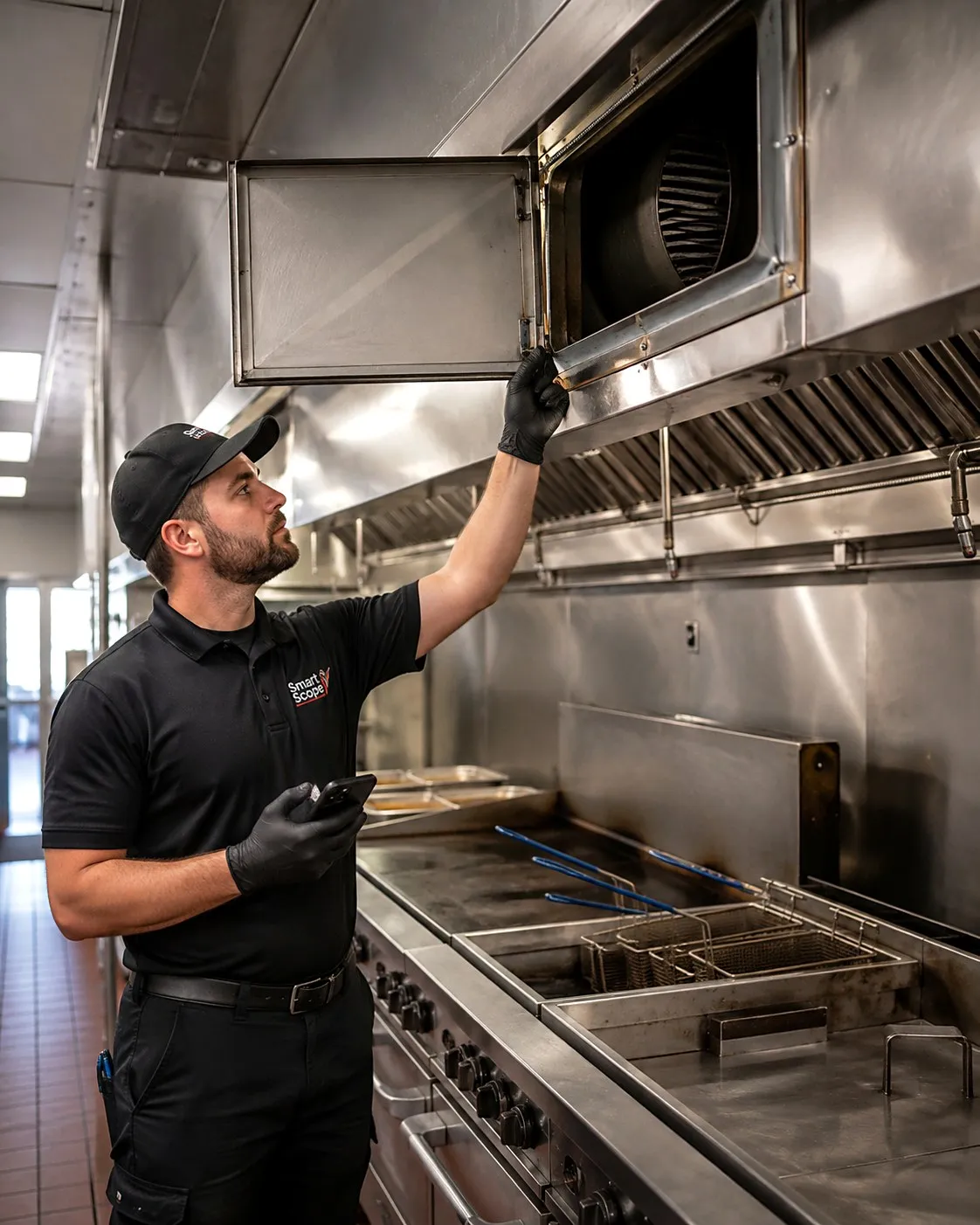
Priced the way the trade actually works
Photos map the system
Shoot each hood, the duct runs, the rooftop fan, and every access panel. The AI counts hoods and filters and flags missing panels straight into the scope.
Per hood, per foot, your numbers
Price by hood, by linear foot of duct, by filter, by fan — from your own book, with rooftop-access and after-hours multipliers set where you want them.
Scope it out loud
“Three hoods, forty feet of horizontal duct, upblast fan, two access panels needed.” Say it once during the walkthrough and the bid writes itself.
Same-night bids win contracts
The manager who called three companies signs with the one whose number arrived first. Send yours before you're out of the parking lot.
Deposit at the signature
Collect the first service payment or contract deposit when they sign — in the app, before the crew is ever scheduled for the night.
Margin per kitchen
See which accounts stay profitable after drive time and rooftop hours — and which monthly heavy-fryer kitchens need repricing at renewal.
Walk it, price it, certify it
Walk the line
Photograph hoods, ducts, and the fan while you narrate cooking volume and access conditions.
AI builds the bid
Hood count, duct footage, and service frequency become priced line items on a professional proposal.
Sign and schedule
The owner signs digitally, the recurring schedule starts, and photos document every service.
Three kitchens, three signed schedules
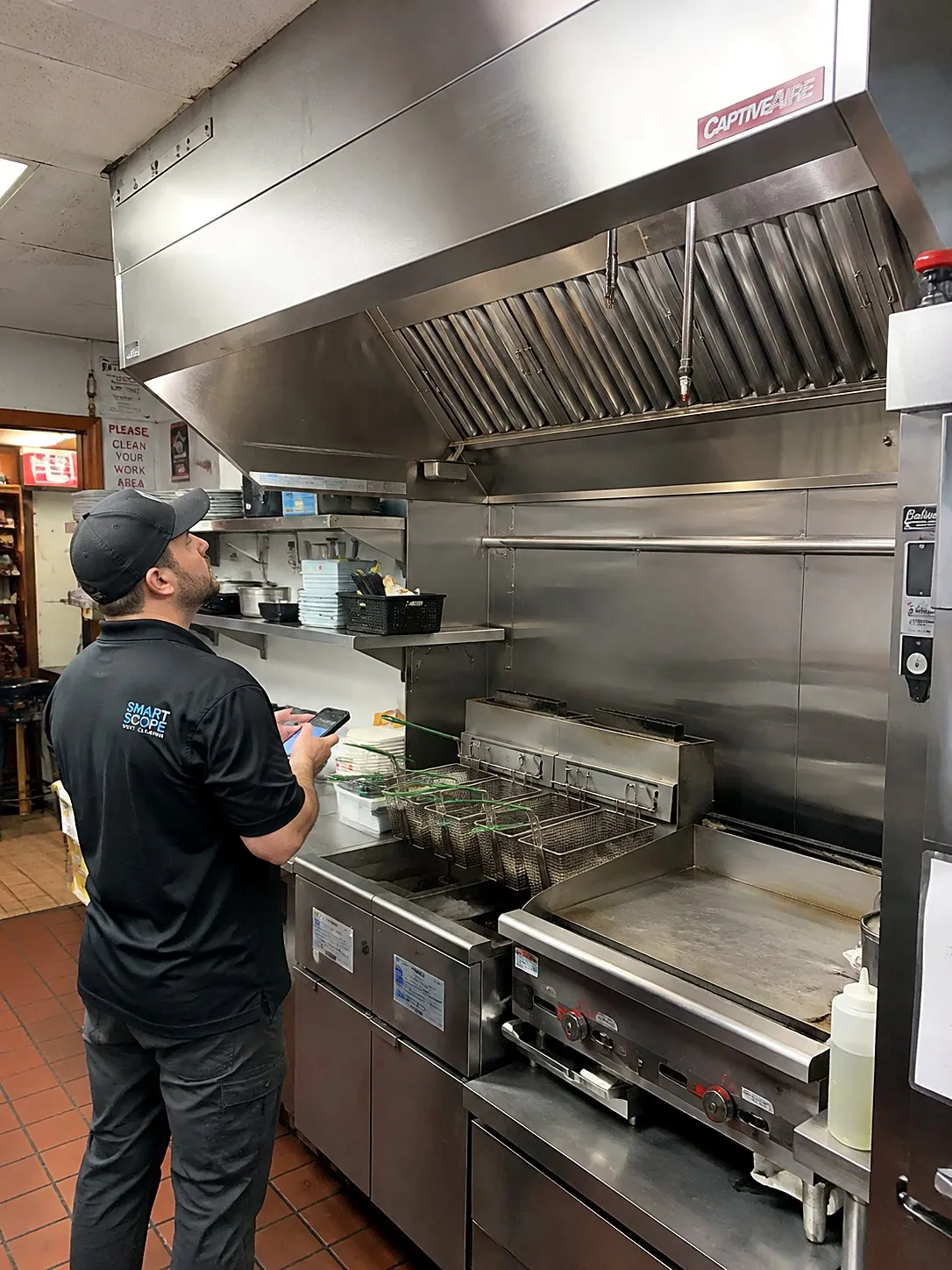
Diner — single hood system
“One ten-foot hood, short duct run, roof fan right above it. Heavy fryer use, so this one's quarterly.”
A quarterly service bid priced per hood and per foot of duct, with filter exchange as a separate add-on line.
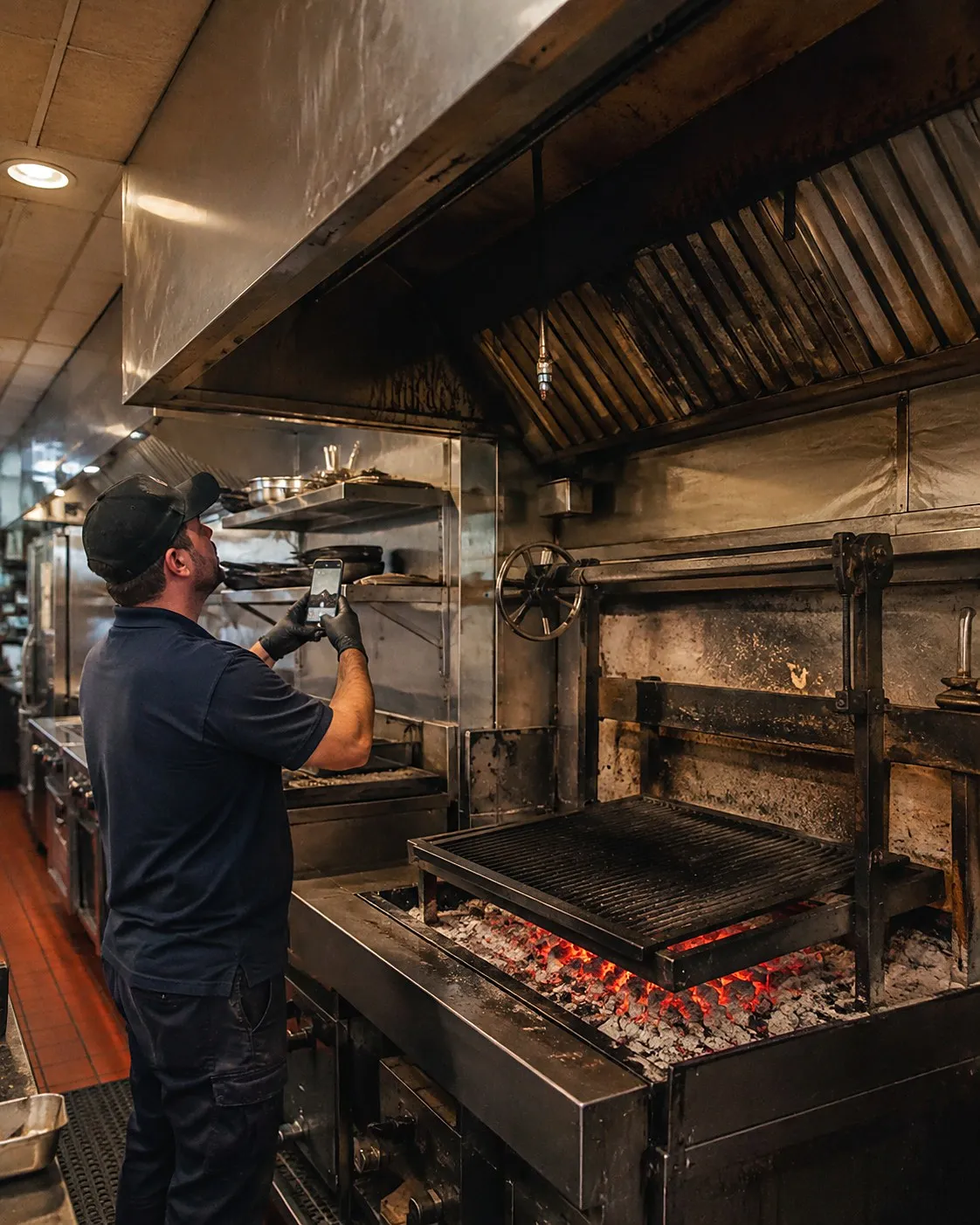
Steakhouse with a solid-fuel grill
“Wood-fired grill means monthly on that hood, quarterly on the other two. Forty-five feet of duct, two access panels missing.”
A split-frequency contract — monthly on the solid-fuel hood, quarterly on the rest — with access panel installation as a priced option.
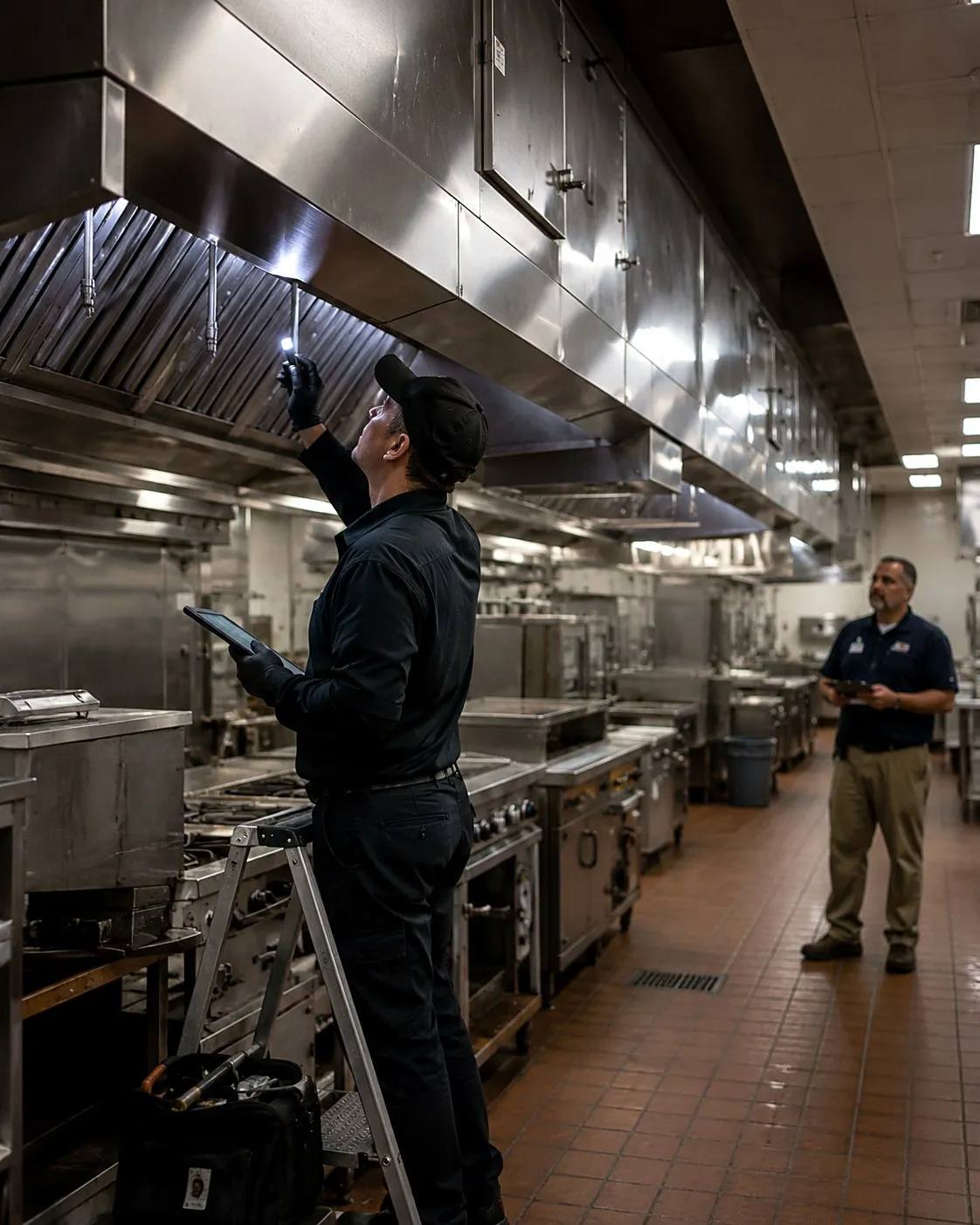
Hospital cafeteria system
“Six hoods across two kitchens, long horizontal runs, night work only with an escort. Semi-annual per their cooking volume.”
A facility-grade proposal with after-hours rates, a per-hood breakdown, and before/after photo documentation spelled out for their compliance file.
Compliance is the contract
Baseline every system
Walkthrough photos establish grease depth, missing panels, and fan condition — the evidence that sets service frequency honestly.
To bare metal, no surprises
Each service runs against line items the customer already approved; extras like panel installs show up as visible add-ons, not disputes.
Proof behind the sticker
Before/after photos and service details live on the job record — what the fire marshal and the insurance carrier both want to see.
Frequency that fits the fryers
Monthly for solid fuel, quarterly for high-volume frying — the schedule becomes a recurring contract with renewals priced from real service history.
Learn the app on 100 sample kitchen jobs.
Load 100 sample kitchen exhaust jobs — quarterly hood degreases, duct scrapes to bare metal, rooftop fan cleanings, grease containment installs, filter exchanges, and NFPA 96 certifications. Every scope carries tagged line items, a full activity trail, and a financial breakdown with margin. Poke at them, reprice them, move them through stages. None of it touches a real kitchen or a real invoice.
Document the hood system before you quote it
Site Walk
Hoods and duct runs, on the record
Walk the kitchen and the roof narrating as you snap photos — every hood, duct run, and fan lands on a timestamped, geotagged timeline. Scan nameplates as you go, and the AI suggests priced line items when you're done.
See Site Walk →
EyesOn
The office sees the grease load, live
Your tech streams live two-way video from the roof — hands-free with Meta Glasses — while the office follows on Command OPS. They see the grease load and the fan condition before anyone writes the scope, and the visit records to the job.
See EyesOn →
Hood cleaning questions
Does it understand NFPA 96 service frequencies?
You set frequency per hood based on cooking volume — monthly for solid fuel, quarterly for high-volume frying, semi-annual or annual for lighter kitchens — and the proposal carries that schedule as contract terms. The AI drafts it from your walkthrough notes.
Can I price per hood and per linear foot on the same bid?
Yes. Your price book holds per-hood rates, per-foot duct rates, filter and fan line items, and multipliers for rooftop or after-hours work. One bid can mix all of them and still read clean to the customer.
How does photo documentation work for compliance?
Walkthrough and service photos stay attached to each job record, so before/after proof is one tap away when an owner, inspector, or insurance carrier asks. It also protects you if a kitchen claims the ducts weren't done.
What does Smart Scope cost?
One subscription with everything included. See current plans on the pricing section of our home page, or download the app and take a look for yourself.
Does it work where there's no signal?
Capture doesn't need one. Site Walk notes, photos, form filling, and nameplate scanning all work offline — basements, crawlspaces, and dead zones included — and sync when you're back in coverage. AI drafting runs when you have a connection, so walk the job dark and let the estimate build on the drive out.
Is there an Android version?
Smart Scope runs on iPhone and iPad today; Android is on the roadmap. Your customers don't need the app at all — estimates, forms, and the portal open as web links on any device.
Does it replace my dispatch or routing software?
No — and it doesn't try. Smart Scope is the estimating layer: it wins the job, then syncs the scope straight to Smart Service, with webhooks to push your data anywhere else. Your dispatch board and routing stack stay right where they are.
Can my crew use it too?
It's built for the person doing the estimating, but it doesn't stop there — dispatch scopes to other users, put EyesOn live video in every tech's hand, and let the office follow along on Command OPS.
What does it cost to try?
Nothing — 45 days, full app, no credit card. When the trial ends you're never auto-charged; the app goes view-only until you decide, and your data stays yours to export.
Can it produce NFPA 96 documentation?
Certificates of performance and before/after photo reports run as digital forms — filled on the roof and in the kitchen, flattened tamper-proof for the fire marshal and the insurer.
Win the kitchen before the grease builds back
Smart Scope is on the App Store — or text SCOPE to 59232 and bid your next walkthrough on the spot.